本文首发于微信公众号「声学号角」
01
—
AES Dublin 2019
最新一届的AES大会将于2019年3月20日至23日在爱尔兰首都都柏林举办。

会议官方链接:
http://www.aes.org/events/146/
AES全称Audio Engineering Society,音频工程协会,是目前音频以及声学行业影响里最大的组织。

02
—
部分内容
会议涉及的方面非常多,包括扬声器,耳机,音箱,传声器(麦克风),音频应用,信号处理,心理声学,录音,空间声学等等很多。
会议日程中我个人非常感兴趣的部分有:
P01-1 Large Horns and Small Rooms – Do They “Play Nicely” Together?—Bjørn Kolbrek, Celestion - Ipswich, UK
For some audiophiles, having a huge, low-cutoff bass horn built into the wall of the listening room represents the ultimate low frequency solution. Without considering the practicalities of such an installation, this paper will look at the performance of low frequency horns mounted in the wall of a small room compared to the performance of a typical point source closed box type sub-woofer and an array of such sub-woofers. Simulation results indicate that in addition to higher ef?ciency, the horns provide smoother response in the listening position and less seat-to-seat variation.
探讨大号角在小房间的性能表现。
P03-1 Green Speaker Design (Part 1: Optimal Use of System Resources)—Wolfgang Klippel, Klippel GmbH - Dresden, Germany
Increasing the efficiency and voltage sensitivity of the electro-acoustical conversion is the key to modern audio devices generating the required sound output with minimum size, weight, cost, and energy. Traditional loudspeaker design sacrifices efficiency for sound quality. Nonlinear adaptive control can compensate for the undesired signal distortion, protect the transducer against overload, stabilize the voice coil position, and cope with time-varying properties of the suspension. The paper presents a new design concept for an active loudspeaker system that uses the new degree of freedom provided by DSP for exploiting a nonlinear motor topology, a soft suspension and modal vibration in the diaphragm, panel, and in the acoustical systems.
P03-2 Green Speaker Design (Part 2: Optimal Use of Transducer Resources)—Wolfgang Klippel, Klippel GmbH - Dresden, Germany
Green speaker design is a new concept for developing active loudspeaker systems that generate the required sound output with minimum size, weight, cost, and energy. This paper focuses on the optimization of the transducer by exploiting the new opportunities provided by digital signal processing. Nonlinear adaptive control can compensate for the undesired signal distortion, protect the transducer against overload, stabilize the voice coil position, and cope with time varying properties of the suspension. The transducer has to provide maximum efficiency of the electroacoustical conversion and sufficient voltage sensitivity to cope with the amplifier limitations. The potential of the new concept is illustrated on a transducer intended for automotive application.
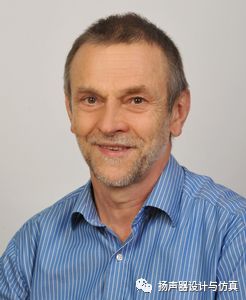
Klippel教授介绍了一种有源扬声器系统的新设计概念。通过利用DSP,研究扬声器系统的优化。
P05-1 Optimized Exciter Positioning Based on Acoustic Power of a Flat Panel Loudspeaker—Benjamin Zenker, Technical University Dresden - Dresden, Germany; Hommbru GmbH - Reichenbach, Germany; Shanavaz Sanjay Abdul Rawoof, TU Dresden - Dresden, Germany; Sebastian Merchel, TU Dresden - Dresden, Germany; Ercan Altinsoy, TU Dresden - Dresden, Germany
Loudspeaker panels, such as distributed mode loudspeakers (DML), are a promising alternative approach in loudspeaker design. DML have many advantages compared to pistonic loudspeakers. However, the frequency response is mostly associated with higher deviations. The position of the excitation is one parameter to optimize the frequency response. An electro-mechanical-acoustical model is presented that enables the optimization of the exciter location, based on the response of the radiated sound power. A simulation model is presented for different surface areas and aspect ratios of the panel. The appropriated positioning and its excitation are discussed based on a single criterion and finally compared with the State of the Art method.
针对分布式扬声器(DML)面板的不同表面积和纵横比,提出了仿真模型。基于辐射声功率的响应来优化激励器位置。
P06-1 Dynamic Driver Current Feedback Methods—Juha Backman, Huawei Technologies - Tampere, Finland; Genelec Oy - Iisalmi, Finland
Current feedback is a versatile method of modifying the behavior of a loudspeaker driver with opportunity for linearization and matching the driver to the enclosure design targets, but depending on the chosen approach a potential risk of increasing the effects of either voice coil impedance variation or driver mechanical parameter nonlinearity, and the current feedback approach needs to be designed to keep these effects well controlled for the intended application. This work compares using a nonlinear simulation model various forms of current feedback, including current drive, finite positive or negative amplifier resistances, negative resistance with reactance. This final part of the work extends the examples given in the earlier papers and presents a feedback approach that would appear to offer benefits in both distortion and thermal compression control.
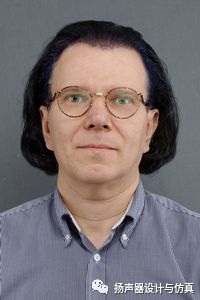
华为公司的Juha Backman介绍了动态电流反馈法。
P06-2 Impact of the Coupling Factor on Lossy Voice Coil Impedance—Isao Anazawa, NY Works - Toronto, ON, Canada The voice coil impedance frequency dependence due to Eddy current, skin, and proximity effects (Eddy Losses) becomes more apparent as the frequency becomes higher. The theory is that the magnitude of lossy impedance frequency dependence is vw . However in the majority of real loudspeakers, the impedance frequency dependence was empirically found to be clearly higher than this. A voice coil blocked impedance model was developed based on a structure that applies a transformer for the voice coil inductance as the primary winding. Surrounding conductive material is treated as an impedance connected to the secondary winding. The model successfully describes the blocked impedance frequency dependence that agreed at a high degree of accuracy with the actual samples. Also the model showed intricate connections between the transformer coupling coefficient k and the magnitude of frequency dependency.
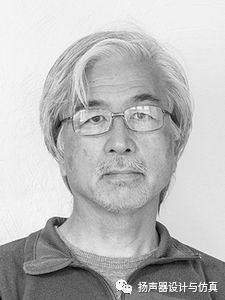
Isao Anazawa提出新的扬声器音圈阻抗模型。
EB05-1 Comparison of Horn Drivers’ Nonlinear Distortion Measured by Different Methods—Alexander Voishvillo, JBL/Harman Professional Solutions - Northridge, CA, USA; Balázs Kákonyi, Harman Professional Solutions - Northridge, CA, USA; Brian McLaughlin, Harman Professional Solutions - Northridge, CA, USA
Multitone and log-sweep testing signals at progressively increasing levels were applied to a horn driver to obtain a nonlinear response. Musical signals were also applied to the driver. The acoustical signal was received at the throat of the horn and at a 1-meter distance from the horn in a 2-Pi anechoic chamber. The levels of the applied signals were incremented in 3 dB voltage steps. The initial horn driver response was corrected to provide maximum flatness and passed through a high-pass filter. Auralization examples and graphic material are demonstrated. The next stage of the research will involve subjective listening tests with signals obtained from measurements and from nonlinear models of horn driver.
来自JBL / Harman Professional Solutions的三位工程师对比了不同方法测试号角扬声器的失真。
EB05-2 New Engineering Method for Design and Optimization of Phasing Plug and Dome-Shaped Compression Chamber of Horn Drivers—Alexander Voishvillo, JBL/Harman Professional Solutions - Northridge, CA, USA
In this work an accurate analytical solution is found for the sound field in a dome-shaped compression chamber. This simplifies the design and optimization of the compression chamber’s annular exits to suppress high-frequency air resonances. In earlier works by other authors, the solution is also found in spherical coordinates. For low-curvature chambers, an approximation in the form of Bessel function summation was used. For high-curvature compression chambers an analytical approximation did not work and FEA had to be used. The new proposed method is based on Mehler-Dirichlet analytical integral presentation of Legendre functions. This approach handles high-curvature dome chambers and does not require using numerical methods. An evaluation of this new method’s applicability to chambers with various different curvatures was implemented.
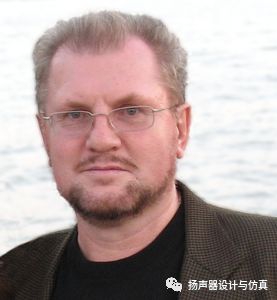
JBL / Harman Professional Solutions的Alexander Voishvillo已经在之前的文章中介绍过了。
介绍一位业界大牛——Alexander Voishvillo
基于之前介绍的压缩高音相位塞设计的模态抑制法,拓展到高曲率膜片。预计看懂这篇文章需要数学功底非常好,会有点烧脑。
T10 - How to Rate the Maximum Loudspeaker Output SPLmax?
Steven Hutt, Equity Sound Investments - Bloomington, IN, USA
Wolfgang Klippel, Klippel GmbH - Dresden, Germany
The new IEC standard IEC 60268-21 defines the maximum sound pressure level SPLmax generated by the audio device under specified condition (broadband stimulus, 1-m distance, on-axis under free-field condition). This value can be rated by the manufacturer according to the particular application under the condition that the device can pass a 100 h test using this stimulus without getting damaged. The SPLmax according to IEC 60268-21 is not only a meaningful characteristic for the end-user, marketing and product development but is also required for calibrating analogue or digital stimuli used for testing modern loudspeaker systems having a wireless input and internal signal processing. The workshop gives an overview on related standards (e.g., CEA 2010) and shows practical ways how to rate a meaningful SPLmax value giving the best sound quality, sufficient reliability, and robustness for the particular application. The methods are demonstrated on passive transducers and active (Bluetooth) speakers.

如何评估扬声器最大输出声压级。

上面是我的个人微信,加我的时候请表明身份,注明来意。